Inclusive Workplaces

in the Bow Valley

A Guide for Employers in Banff, Canmore and Lake Louise

What is an Inclusive Workplace?

An inclusive workplace is an environment where people of all identities feel safe, respected, and able to contribute fully to their work. In practice, this means creating policies, leadership practices, and everyday workplace interactions that support diversity and belonging.

For organizations in the Bow Valley, inclusive workplaces are especially important. Businesses in Banff, Canmore, and Lake Louise rely on diverse teams that often include international workers, seasonal staff, and people from many cultural and identity backgrounds. Inclusive workplaces help employees thrive, strengthen team culture, and improve the experience for visitors from around the world.

Inclusive Workplace

a work environment where employees of all backgrounds, identities, and experiences feel respected, supported, and able to fully participate in their work. Inclusive workplaces actively remove barriers, promote equity, and create cultures where people feel a genuine sense of belonging


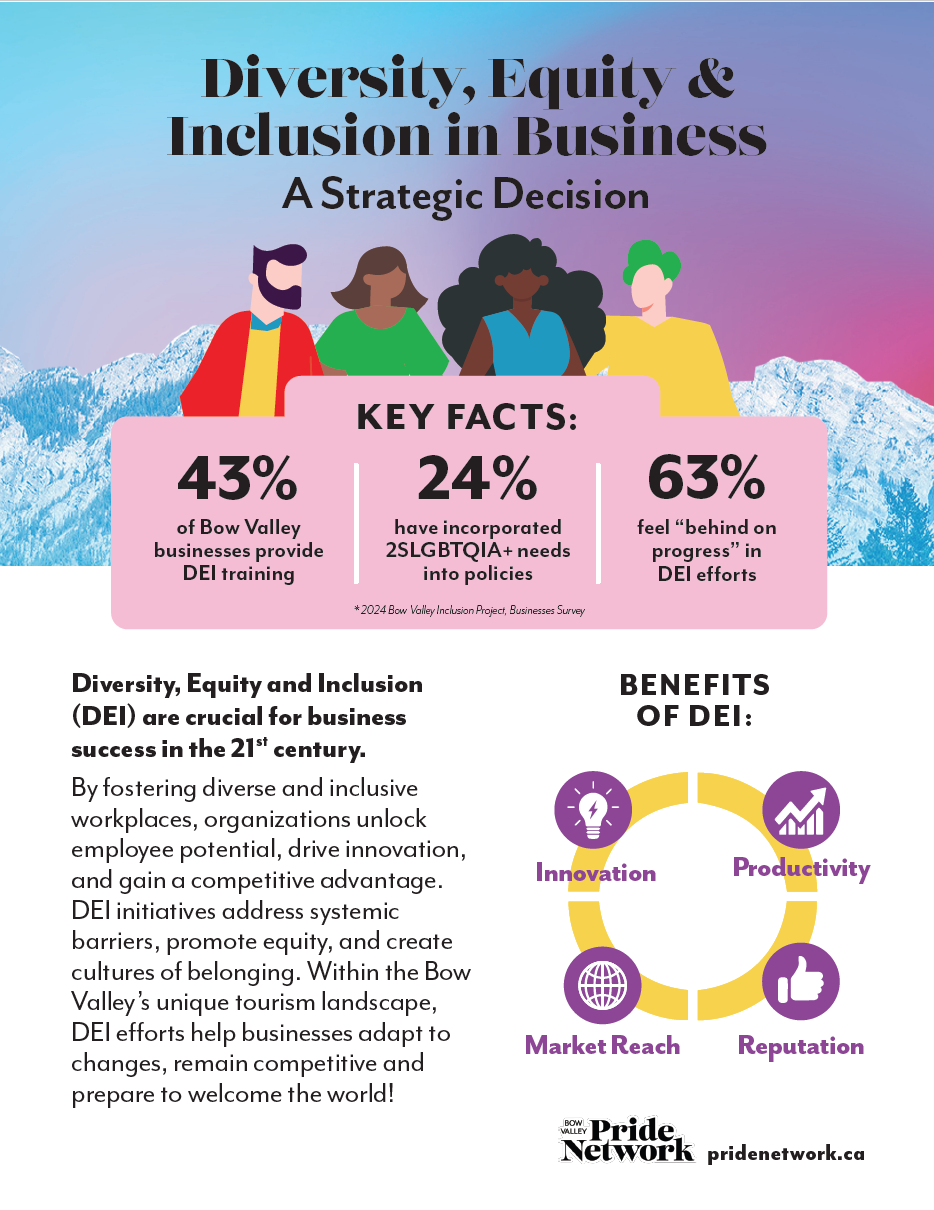
Diversity, Equity, and Inclusion (DEI)

 a framework used by organizations to create fair and welcoming environments for employees and customers. Diversity refers to the range of identities and experiences people bring to the workplace. Equity focuses on fair access to opportunities and resources. Inclusion ensures that people feel respected, supported, and able to participate meaningfully in the workplace.


Psychological Safety

the shared belief within a workplace that employees can speak up, share ideas, ask questions, and raise concerns without fear of embarrassment, punishment, or negative consequences. Workplaces that foster psychological safety encourage open communication, innovation, and stronger collaboration among team members.

WHY IT MATTERS IN THE BOW VALLEY

Banff and Canmore are global tourism destinations. Guests arrive from dozens of countries, representing every identity and background. At the same time, the local workforce is seasonal, young, transient, and culturally diverse, a combination that creates both opportunity and genuine complexity for employers.

Small mountain towns face pressures that urban HR departments don't. There is no large internal DEI team. Staff housing creates blurred professional-personal boundaries. And the pace of seasonal turnover makes consistent training difficult to sustain. That's precisely why place-based, practical training matters.

The 9 Commitments of Inclusive Workplaces

Creating an inclusive workplace does not happen by accident. It requires clear commitments, intentional leadership, and everyday actions that reinforce a culture of respect and belonging.

The Bow Valley Pride Network encourages organizations to adopt a set of practical commitments that support inclusive workplaces across Banff, Canmore, and Lake Louise. These commitments help businesses create environments where employees feel respected, valued, and able to contribute fully to their work.

For many organizations, these commitments serve as a starting point for building more inclusive policies, workplace practices, and leadership approaches.

A Framework for Inclusive Workplaces

While every workplace is unique, organizations that prioritize inclusion typically focus on several core areas. These commitments help guide how inclusion shows up in daily workplace culture, leadership practices, and employee experiences.

1: Inclusive Facilities

Workplaces should ensure that facilities are welcoming and accessible for everyone. This may include gender-neutral washrooms, inclusive signage, and thoughtful consideration of how workplace environments support employees of all identities.

4: Celebrating Diverse Identities

Inclusive workplaces acknowledge and celebrate the diversity of their teams. This includes recognizing the experiences and contributions of 2SLGBTQ+ employees and supporting visibility within workplace culture.

7: Visible Signals of Inclusion

Visible signs of inclusion, such as inclusive policies, staff training, and public commitments help communicate that a workplace values diversity and belonging.


2: Inclusive Language

Language plays a powerful role in shaping workplace culture. Organizations can foster inclusion by using respectful and gender-inclusive language in policies, communications, and everyday conversations.

5: Respect for Individual Expression

Employees should feel comfortable expressing their identity, including gender expression, clothing, and personal presentation, without fear of judgment or discrimination.

8: Continuous Learning

Building an inclusive workplace is an ongoing process. Organizations benefit from ongoing education, reflection, and training that help employees and leaders strengthen inclusive practices.


3: Non-Assumptive Service

Inclusive workplaces encourage employees to avoid assumptions about others’ identities, relationships, or experiences. Respectful interactions help create environments where people feel safe and valued.

6: Protecting Personal Information

Organizations should handle personal information with care and respect. This includes respecting confidentiality when employees share information related to their identity or personal experiences.

9: Culture of Belonging

Inclusive workplaces foster cultures where employees feel valued and supported. This includes creating opportunities for dialogue, feedback, and meaningful participation in workplace decisions.

Creating inclusive workplaces is an ongoing journey. Organizations often begin by adopting commitments like these and then build deeper inclusion strategies through policies, training, and leadership development.

The following sections explore practical steps organizations can take to strengthen inclusion within their workplaces.

Common Workplace Inclusion

Challenges in the Bow Valley

Building inclusive workplaces is an ongoing effort for organizations across Banff, Canmore, and Lake Louise. While many businesses in the Bow Valley are committed to creating welcoming environments, employers often face unique challenges shaped by the region’s tourism economy, seasonal workforce, and small-community dynamics.

Understanding these challenges helps organizations identify practical steps that support both employees and visitors. Many of the barriers that businesses encounter are not the result of lack of intention, but rather limited resources, high staff turnover, or uncertainty about how to implement inclusive practices effectively.

Below are several common workplace inclusion challenges that employers in the Bow Valley often navigate.

Seasonal Workforce Turnover

Many businesses in Banff and Lake Louise rely on seasonal staff who may only work in the region for a few months. High turnover can make it difficult for organizations to build long-term workplace culture or provide consistent inclusion training.

Without structured onboarding and training, new employees may not fully understand workplace expectations around respectful communication, inclusive service, or diversity in the workplace.

Diverse International Workforce

The Bow Valley attracts workers from around the world. Many workplaces include employees whose first language is not English and who bring different cultural understandings of gender, identity, and workplace norms.

While this diversity strengthens teams, it can also create moments of misunderstanding or uncertainty if organizations do not provide guidance around inclusive workplace practices.

Limited HR Capacity in Small Businesses

Many tourism and hospitality businesses in Banff and Canmore operate with small management teams and limited HR resources. Owners and managers are often responsible for hiring, training, and workplace culture while also running day-to-day operations.

This can make it challenging to develop structured inclusion strategies, even when there is strong interest in improving workplace culture.

Navigating Inclusion in Small Communities

In smaller communities, employees may feel more visible when expressing aspects of their identity. Workers who identify as LGBTQ+ or belong to other marginalized communities may worry about privacy, stigma, or how they will be perceived by colleagues and customers.

Creating inclusive workplace cultures helps ensure employees feel respected and supported, regardless of how visible or open they choose to be about their identities.

Guest and Customer Interactions

Frontline employees in tourism and hospitality frequently interact with guests from a wide range of backgrounds and perspectives. Staff may encounter situations where they need to navigate sensitive conversations or respond to inappropriate behaviour.

Without guidance, employees may feel unsure how to handle these moments respectfully and confidently.

Why it matters

Consistent training and clear workplace policies help ensure that all staff members regardless of how long they stay contribute to a respectful and welcoming workplace culture.

Why it matters

Clear communication, inclusive policies, and respectful dialogue help build shared understanding across diverse teams.

Why it matters

Practical tools, training programs, and community resources can help smaller organizations build inclusive workplaces without requiring large HR teams.

Why it matters

Workplaces that actively support belonging help employees feel safer, more confident, and more connected to their teams.

Why it matters

Providing employees with tools and training helps them respond to difficult situations while maintaining welcoming environments for everyone.


While these challenges are common across the Bow Valley, they also present opportunities. Organizations that proactively address workplace inclusion often see stronger team cohesion, improved staff retention, and more positive guest experiences.

In the next section, we explore practical steps that businesses can take to build more inclusive workplaces across Banff, Canmore, and Lake Louise.

Practical Steps to

Build Inclusive Workplaces

Creating an inclusive workplace does not require large HR teams or complex policies. Many organizations begin with small, practical steps that strengthen workplace culture and build awareness across their teams.

For employers in Banff, Canmore, and Lake Louise, these actions can help create workplaces where employees feel respected, supported, and confident serving visitors from diverse backgrounds.

The steps below provide a starting point for organizations that want to strengthen workplace inclusion.

Step 1: Build Awareness Through Leadership

Inclusive workplaces begin with leadership. Managers and business owners play an important role in setting expectations around respect, inclusion, and workplace culture.

Leaders who openly support inclusive practices help create environments where employees feel safe, valued, and confident raising questions or concerns.

Step 2: Review Workplace Policies

Policies help set clear expectations for how organizations support employees and respond to discrimination or harassment.

Reviewing workplace policies ensures that language is inclusive and that employees understand how to report concerns or seek support when needed.

Step 3: Provide Staff Training

Training helps employees understand inclusive workplace practices and gives them tools to respond to real situations they may encounter at work.

For tourism and hospitality businesses in the Bow Valley, training can also support employees in delivering welcoming experiences to guests from around the world.

Step 4: Create Inclusive Workplace Culture

Policies and training are important, but inclusion is ultimately reflected in everyday interactions.
Encouraging respectful communication, listening to employee perspectives, and acknowledging diverse experiences all contribute to a stronger workplace culture.

Step 5: Commit to Continuous Learning

Building an inclusive workplace is an ongoing process. Organizations benefit from regularly reviewing policies, updating training, and staying informed about evolving best practices.

Support for Bow Valley Employers

Many businesses want to strengthen workplace inclusion but are unsure where to begin. The Bow Valley Pride Network provides practical tools and training that help organizations take meaningful steps forward.

Our programs support employers across Banff, Canmore, and Lake Louise by providing:

• workplace inclusion workshops
• leadership training
• practical resources for employers
• connections to a growing network of inclusive businesses

Workplace Inclusion in Tourism

Inclusive Workplaces Create Better Guest Experiences

Frontline tourism employees interact with visitors from many different cultures, identities, and life experiences. Staff who work in respectful and supportive environments are better prepared to create welcoming experiences for everyone.

Inclusive workplaces encourage employees to approach interactions without assumptions and to respond thoughtfully to the needs of diverse guests. This helps ensure visitors feel comfortable, respected, and able to enjoy their time in the Bow Valley.

For many travellers, small moments of inclusion such as respectful language or thoughtful service can significantly shape how welcome they feel in a destination.

Inclusion Strengthens Tourism Reputation

Destinations that prioritize inclusive practices build strong reputations among travellers seeking welcoming and safe environments. As global tourism continues to evolve, many visitors actively look for destinations that demonstrate respect for diversity and belonging.

Banff and the Bow Valley attract millions of visitors each year. Businesses that invest in inclusive workplaces help strengthen the region’s reputation as a welcoming destination for people from all backgrounds.

This commitment to inclusion supports both local businesses and the broader tourism economy.

Inclusive Workplaces Improve Staff Retention

Tourism businesses often face challenges with staff recruitment and retention, particularly in seasonal markets like Banff and Lake Louise.

Employees who feel respected and supported are more likely to remain with their employers and recommend their workplace to others. Inclusive workplace cultures can therefore contribute to stronger teams and more stable work environments.

By prioritizing inclusion, businesses can create workplaces where employees feel comfortable bringing their full selves to work, which strengthens morale and long-term engagement.


Inclusive workplaces play an important role in shaping how businesses welcome both employees and guests. By strengthening workplace culture, organizations contribute to a more welcoming tourism community across Banff, Canmore, and Lake Louise.

Workplace Inclusion Resources

for Bow Valley Employers

Building an inclusive workplace is an ongoing learning process. Many organizations strengthen their workplace culture by exploring practical resources, case studies, and guidance that help translate inclusion principles into everyday practices.

The articles below provide additional insights for employers, managers, and team leaders working across Banff, Canmore, and Lake Louise. Each resource explores a specific aspect of workplace inclusion and offers practical ideas that organizations can apply within their own workplaces.

Inclusive Workplace Culture

Workplace Policies and Practices

Learning and Professional Development

From Insight to Action

Exploring resources is often the first step toward building more inclusive workplaces. Many organizations strengthen their efforts by combining learning with practical training and guided discussions.

The Bow Valley Pride Network offers workplace inclusion workshops designed specifically for employers and teams in Banff, Canmore, and Lake Louise. Ready to take the next step?

Ready to Build a More Inclusive Team?

Whether you're starting from scratch or strengthening what you've already built, the Bow Valley Pride Network meets you where you are. Our workshops are practical, respectful, and designed for the real pace of mountain tourism work.

Who We Work With

The Bow Valley Pride Network works primarily with tourism-based businesses and organizations in Banff, Canmore, and the broader Bow Valley region. If your business involves guests, front-line staff, or seasonal employees, this work is relevant to you.

  • Hotels, lodges, and short-term rental operators

  • Restaurants, cafes, and food service businesses

  • Adventure tourism and outdoor recreation operators

  • Retail shops in tourism-heavy corridors

  • Event organizers and festival operators

  • Municipal and Parks staff who interface with the public

  • Non-profits and community organizations serving the Bow Valley

Frequently

Asked Questions

Organizations across Banff, Canmore, and Lake Louise often have questions about how to build inclusive workplaces and strengthen workplace culture. The answers below address some of the most common questions employers ask when beginning or expanding workplace inclusion efforts.

  • An inclusive workplace is a work environment where employees of all identities and backgrounds feel respected, supported, and able to participate fully in their organization. Inclusive workplaces promote fair treatment, remove barriers to opportunity, and foster cultures where employees feel they belong.

    In practice, this includes respectful communication, inclusive workplace policies, leadership commitment to diversity, and ongoing learning that helps organizations strengthen their workplace culture.

  • Businesses can build inclusive workplaces by taking practical steps that support both employees and workplace culture. These steps often include leadership training, reviewing workplace policies, encouraging respectful communication, and providing opportunities for employees to learn about diversity and inclusion.

    Organizations in the Bow Valley often begin by introducing workplace inclusion training, updating policies to support equitable practices, and creating open environments where employees feel comfortable sharing ideas and perspectives.

  • Workplace inclusion is especially important in tourism because employees interact directly with guests from around the world. When employees feel supported and respected in their workplace, they are better equipped to provide welcoming and thoughtful service to visitors.

    For destinations like Banff and the Bow Valley, inclusive workplaces contribute to positive visitor experiences and help strengthen the region’s reputation as a welcoming place for travelers from diverse backgrounds.

  • Many organizations strengthen workplace inclusion through structured learning opportunities such as workshops, leadership training, and facilitated discussions. Training helps employees understand inclusive workplace practices and provides practical tools for responding to real situations they may encounter at work.

    The Bow Valley Pride Network offers workplace inclusion workshops designed for employers and teams across Banff, Canmore, and Lake Louise. These workshops help organizations build awareness, strengthen workplace culture, and create welcoming environments for both employees and visitors.

  • A microaggression is a brief, often unintentional comment or action that communicates a negative or dismissive message to a person based on their identity. In tourism settings, microaggressions can affect both staff and guests, and typically stem from assumptions rather than deliberate hostility. Training helps teams recognize and interrupt these patterns.

  • No. Inclusive workplace training benefits all teams and all guests. Every tourism business in the Bow Valley serves a diverse guest base. Training helps staff respond with confidence, respect, and consistency regardless of who walks through the door.

  • The Bow Valley Pride Network is based in the Bow Valley and builds all programming around the specific realities of mountain tourism: seasonal staffing, international guest demographics, small-business constraints, and rural community context. National programs are often designed for corporate environments and require significant adaptation for a business in Banff or Canmore.