
Inclusive Facilities Done Right
The Space You Create Tells Guests Who Is Welcome
Your facilities speak before your staff do. A guest who cannot find a washroom they feel safe using, or who is assigned a room that does not reflect their identity, does not need to complain to communicate that message. They simply do not return. And in a destination like Banff or Canmore, where word-of-mouth and online reviews shape bookings across an entire season, that experience travels fast.
Inclusive facilities are not about expensive renovations. Most of the highest-impact changes cost little or nothing. They require thoughtful policy, clear signage, and staff who understand why the details matter.
Why Facilities Matter for 2SLGBTQIA+ Guests
Key Term: Gender-Affirming Space A gender-affirming space is any physical environment designed so that people of all gender identities, including transgender, non-binary, and gender-diverse individuals, can move through it safely and with dignity. Gender-affirming spaces reduce the need for guests to disclose or justify their identity in order to access basic services.
2SLGBTQIA+ travellers, and particularly transgender and non-binary guests, frequently report that facilities are a primary source of anxiety when choosing where to stay. Research from Community-Based Research Centre Canada (CBRC) has documented that many 2SLGBTQIA+ people modify travel behaviour to avoid uncomfortable or unsafe situations, including avoiding destinations with limited inclusive infrastructure.
For Alberta tourism businesses, this is a meaningful strategic consideration. The Bow Valley draws international visitors, many from markets where inclusive travel has become an active booking criterion. Businesses in Canmore and Banff that lead on facilities will be positioned to capture that segment while others catch up.
Washrooms: The Most Immediate Test
For many 2SLGBTQIA+ guests, particularly those who are transgender or non-binary, using a public or shared washroom is one of the most anxiety-producing parts of travel. Your washroom setup sends an immediate signal about how welcome they are.
Practical Steps
Designate at least one all-gender single-occupancy washroom. If you have a single-stall washroom currently labelled "Men" or "Women," removing that label and replacing it with "Washroom" or an all-gender sign is one of the fastest, lowest-cost changes available to you.
Use clear, non-gendered signage. Signs that show toilet icons rather than gendered figures communicate inclusion without requiring explanation. Organizations like Rainbow Registered and the CQCC offer signage resources as part of their accreditation support.
Do not place all-gender washrooms in inconvenient or stigmatizing locations. If the all-gender option is a long walk from the main facilities or located near a service entrance, the message it sends defeats the purpose.
Train staff not to redirect guests. A staff member who says "that washroom is actually for..." causes direct harm, even with good intentions. This is a training issue, and it is covered in depth in our staff training fundamentals post.
For Larger Properties
Spas, lodges, and hotels with multi-stall washrooms should assess whether all-gender multi-stall options are feasible. Where full conversion is not possible, a clear posted policy confirming that guests may use the facilities that align with their gender identity is a meaningful step. Staff should be prepared to support that policy confidently.
Change Rooms and Spa Areas: Nuance Required
Key Term: Privacy-First Design Privacy-first design refers to facility layouts that give all guests individual privacy options, such as curtained stalls or private change cubicles, regardless of the reason a guest wants privacy. This approach reduces the burden on any one group to disclose their needs and creates a better experience for all guests.
Change rooms and spas are where many hospitality businesses feel uncertain about inclusion. The discomfort often comes from a misunderstanding: inclusive facilities do not require eliminating privacy. They require building privacy in for everyone.
Practical Steps for Change Rooms
Install curtained change stalls or individual cubicles where feasible. This benefits transgender guests, guests with disabilities, guests recovering from surgery, guests with body image concerns, and frankly most guests. Privacy-first design is good hospitality design.
Create a posted policy that is easy for staff to explain. Guests should not need to ask staff for a workaround. A clear, brief policy posted at the entrance to the change area tells guests what to expect before they need to ask.
Avoid requiring guests to disclose medical or personal information to access private change options. The option should be available without explanation.
Practical Steps for Spa Areas
Mountain spas in Banff and Canmore are a significant revenue driver. Many spas still operate with gendered booking systems, gendered treatment rooms, or assumptions embedded in intake paperwork.
Review your intake forms. Remove unnecessary gender fields or replace binary options with an open field. Collect only what is medically or operationally necessary.
Train therapists on the use of preferred names and pronouns. This is a basic professional standard, not an exceptional request.
Avoid gendered product or treatment assumptions. Do not assume a guest's treatment preferences based on perceived gender. Ask.
Review uniform and attire requirements if your spa has them. Policies that require guests to wear gendered attire as a condition of access create barriers.
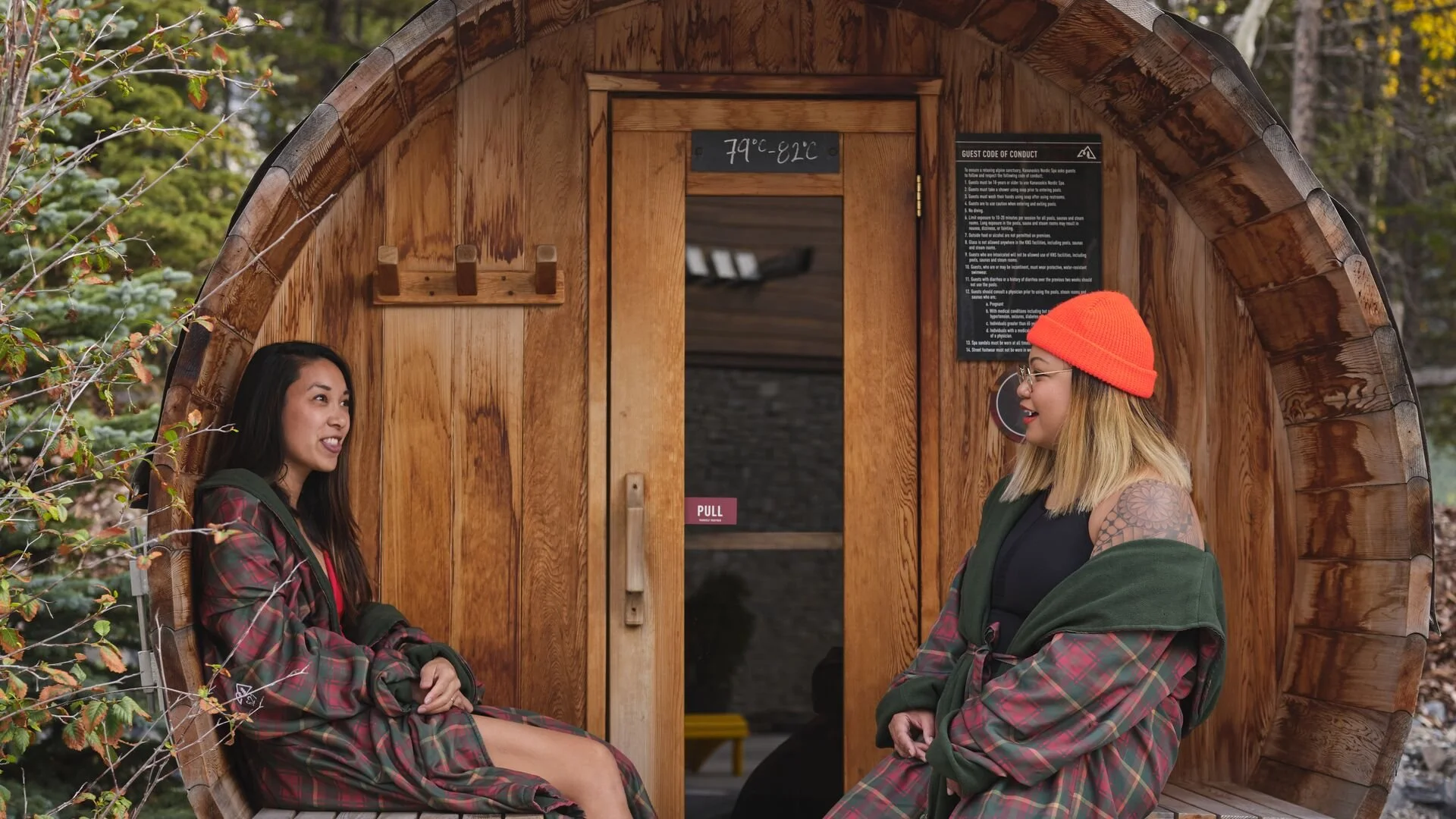
One practical note for Rocky Mountain spa operators: if your facility uses outdoor thermal or mineral pools, assess your policy on swimwear. Many facilities have outdated policies that can inadvertently exclude transgender guests or guests with diverse body presentations. A policy that simply requires appropriate swimwear and defines that in inclusive terms covers the intent without the exclusion.
Room Assignment: Getting It Right at Check-In
Key Term: Affirming Room Assignment Affirming room assignment is the practice of confirming room type, bedding configuration, and booking details in a way that respects a guest's stated identity and relationship structure without requiring them to explain or justify it. It avoids assumptions and keeps the check-in experience welcoming.
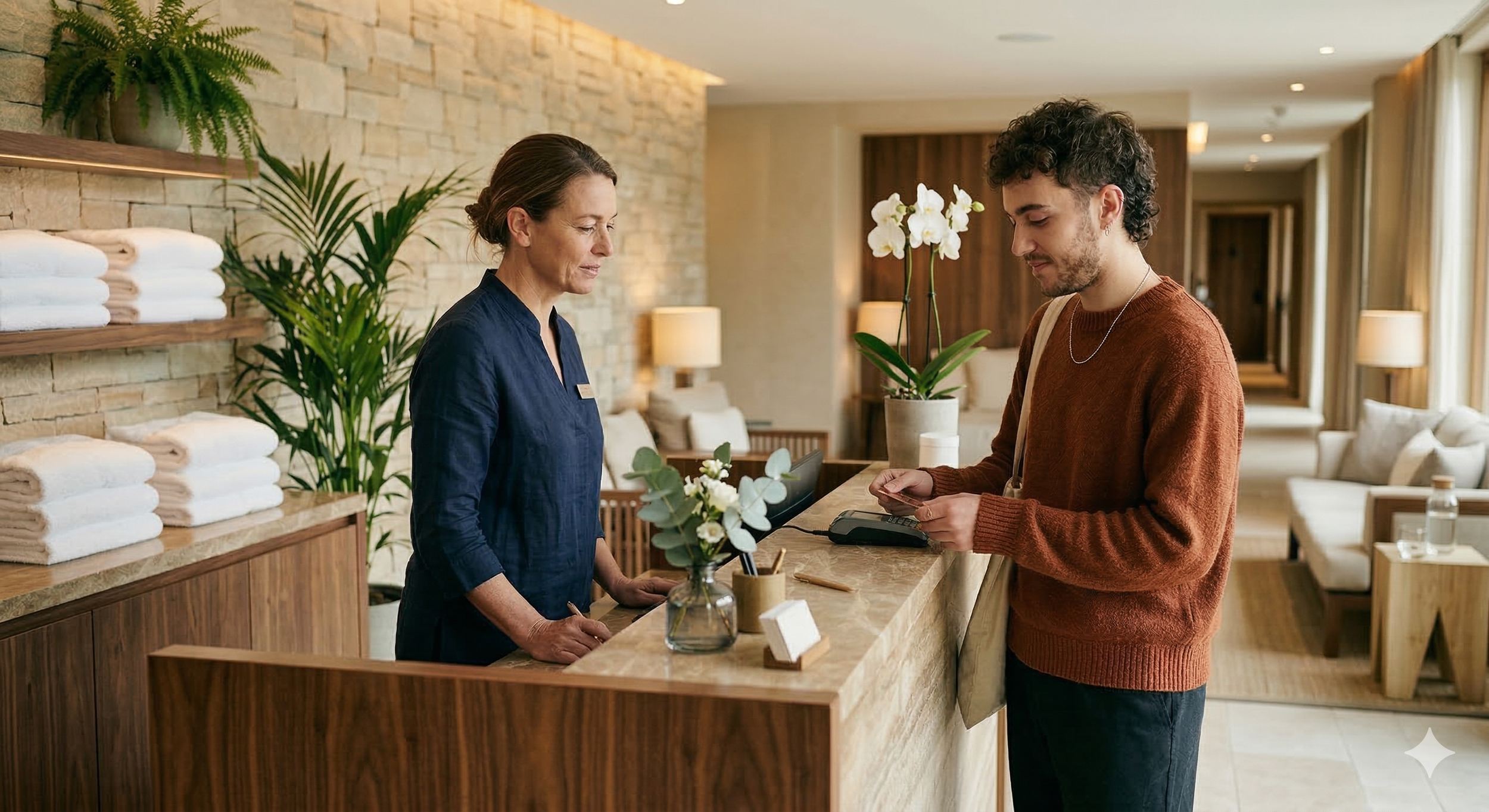
Check-in is a high-stakes moment for 2SLGBTQIA+ guests, particularly those who are travelling as couples, travelling with chosen family, or who have a name or appearance that does not match their booking documents.
Common Friction Points and Solutions
Name mismatches. A guest may have a chosen name that differs from their legal name on a booking. Train front desk staff to ask for the name a guest prefers to be called and to use it throughout the stay. This does not require legal name confirmation for most standard hospitality purposes.
Bedding assumptions. Do not assume bed configuration based on perceived gender or relationship. If a booking does not specify, ask at check-in without framing the question in a way that implies one configuration is standard. "Your reservation shows a room with two queen beds. Would you prefer a king if one is available?" is neutral and helpful.
Couples and relationship framing. Avoid "Is this for you and your wife/husband?" Neutral language ("Is this room for two guests?") avoids the assumption without drawing attention to it.
Document discrepancies. If your property requires ID, train staff on how to handle situations where a guest's name or gender marker does not match their appearance or stated identity. A clear internal policy prevents staff from having to improvise in front of a guest.
For Booking Systems
If you have control over your reservation system or booking form, consider:
Offering title fields that include neutral options (Mx., no title) or removing the title field entirely
Adding a preferred name field separate from the legal name field
Including a special requests field that guests can use to communicate needs without having to call and explain
The Connection Between Facilities and Staff Training
Physical changes to your facilities create the conditions for inclusion. Staff training ensures those conditions are actually experienced by guests.
A gender-neutral washroom with no staff awareness behind it can still result in a guest being redirected or questioned. A spa intake form with a neutral gender field still fails if the therapist uses the wrong name. The two elements work together.
If your team is ready to move from facility improvements to building a consistent, confident approach to welcoming 2SLGBTQIA+ guests across every touchpoint, the Bow Valley Pride Network offers DEI workshops designed specifically for hospitality teams in Banff, Canmore, and the broader Bow Valley. These are practical, non-preachy sessions focused on real situations your staff will encounter.
A Quick-Reference Checklist
Washrooms
At least one all-gender, single-occupancy washroom available
Non-gendered signage in place
Staff trained not to redirect guests
Change Rooms and Spas
Private change stalls or curtained cubicles available
Posted policy on change room access is clear and accessible
Intake forms reviewed for unnecessary gender fields
Staff trained on preferred names and pronouns
Swimwear and attire policies reviewed for inclusivity
Room Assignment and Check-In
Staff trained on neutral bedding and relationship framing
Preferred name captured at booking or check-in
Internal policy in place for document discrepancy situations
Booking system reviewed for neutral title and name fields








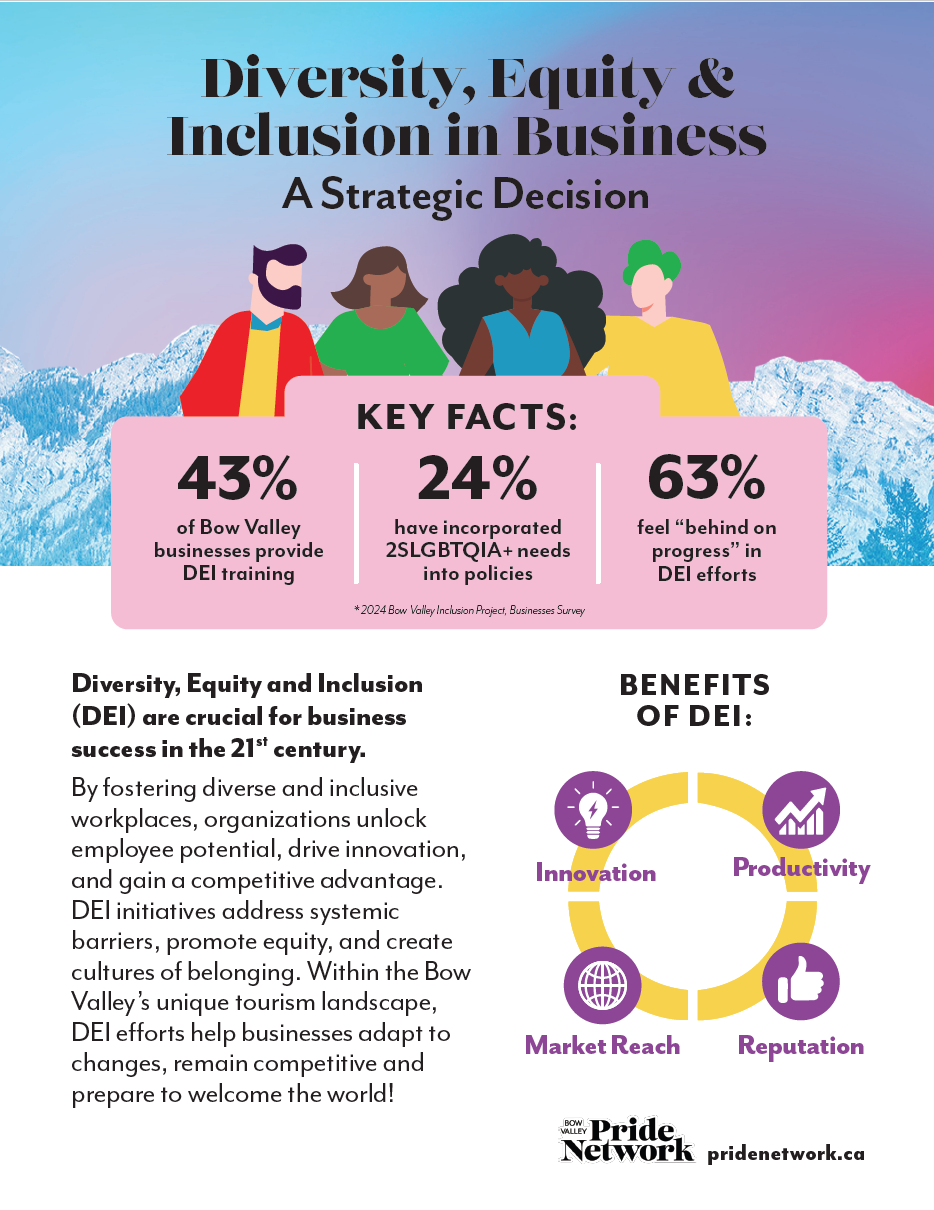

The Bow Valley Pride Network supports tourism and hospitality businesses in Banff, Canmore, and the Bow Valley region in building inclusive practices that reflect the communities they serve and the guests they welcome. To learn more or to book a DEI workshop for your team, get in touch.