Key DEI and 2SLGBTQIA+ Terms Every Tourism Professional Should Know
The words we use shape the experiences people have. In Banff, Canmore, and across the Bow Valley, tourism businesses welcome guests from around the world every single day. Knowing the right language is one of the most practical tools you can offer your staff. This glossary was built for tourism professionals in Alberta's mountain communities who want to move from good intentions to genuine inclusion.
Terminology in diversity, equity, and inclusion (DEI) work is not about memorizing a list and checking a box. It is about understanding why certain words matter to the people they describe. When your front desk team, guides, and guest services staff share a common vocabulary, the result is a more consistent and welcoming guest experience across the board.
How to Use This Glossary
This resource is organized alphabetically. Each entry includes:
A clear, concise definition
Why it matters in a tourism or hospitality context
A practical note for Bow Valley businesses where applicable
This glossary reflects language in common use as of its publication date. Language evolves, and the Bow Valley Pride Network recommends revisiting terminology annually.
Glossary
-
Definition: 2SLGBTQIA+ stands for Two-Spirit, Lesbian, Gay, Bisexual, Transgender, Queer or Questioning, Intersex, Asexual, and the plus sign represents additional identities not captured by the preceding letters. The "2S" is placed first in the Canadian version of this acronym to honour Two-Spirit people, an Indigenous identity that predates European colonization.
Why it matters: This is the preferred acronym in Canadian federal and provincial government communications, and in Indigenous-led contexts across Alberta. Knowing the Canadian standard signals to guests and staff that your business is informed and respectful of local usage.
Practical note: You may also see LGBTQ+ or LGBTQ2S+ used in other contexts. The core intent is the same. When in doubt, follow the lead of the communities you are working with.
-
Definition: Inclusive accessibility refers to the practice of designing physical spaces, communications, and services so that people of all abilities, identities, and backgrounds can participate fully without barriers.
Why it matters: Accessibility is often discussed in terms of physical disability, but in inclusive tourism it also encompasses language access, gender-neutral facilities, and welcoming signage. In Canmore and Banff, where outdoor adventure and hospitality intersect, ensuring your business is accessible to 2SLGBTQIA+ guests is both an ethical and business priority.
-
Definition: An ally is a person who does not identify as part of a marginalized group but who actively supports the rights, dignity, and inclusion of that group. Allyship is the ongoing practice of that support, which involves listening, learning, and taking action.
Why it matters in tourism: Allyship among staff is one of the most visible and immediate ways a business signals its values. A front desk employee who confidently uses a guest's correct pronouns, or who redirects a colleague's unintentional microaggression, is practicing active allyship.
Key distinction: Allyship is a practice, not an identity. It is demonstrated through consistent action, not just stated in a job posting or website footer.
-
Definition: Asexual, often shortened to ace, describes a person who experiences little or no sexual attraction to others. Aromantic, often shortened to aro, describes a person who experiences little or no romantic attraction. These are distinct orientations that can exist independently of each other and in combination with other identities.
Why it matters: Asexual and aromantic identities represent the "A" in 2SLGBTQIA+ and are among the most frequently overlooked identities in both marketing and staff training. Ace and aro guests may be travelling with partners, friends, or chosen family in configurations that do not fit conventional couple-based assumptions. Avoid framing all guest relationships through a romantic or sexual lens.
Key distinction: Asexual people may still experience romantic attraction. Aromantic people may still experience sexual attraction. The two spectrums are separate, and individuals may identify anywhere along either one.
-
Definition: Belonging is the experience of feeling fully accepted, valued, and able to be oneself within a space or community. In DEI practice, belonging is considered a step beyond inclusion: inclusion is about being welcomed in, while belonging is about feeling safe enough to show up authentically once you are there.
Why it matters in tourism: A guest can be technically included, meaning they were not turned away and received standard service, yet still not feel a sense of belonging if staff interactions, signage, and marketing reflected assumptions that did not account for their identity. In Banff and Canmore, where many guests travel specifically to experience a welcoming mountain community, belonging is the goal that inclusion is designed to achieve.
Key distinction: Inclusion is structural. Belonging is felt. Both require intentional effort to build.
-
Definition: Bisexual describes a person who experiences attraction to people of their own gender and people of other genders. Bisexuality is a distinct identity, not a transitional phase or a point on a spectrum between gay and straight.
Why it matters: Bisexual people are among the most underrepresented in mainstream LGBTQ+ visibility campaigns, despite being a significant portion of the broader community. Inclusive businesses avoid assumptions about any guest's identity or relationship structure.
-
Definition: Chosen family refers to the networks of close friends, community members, and allies that many 2SLGBTQIA+ people build as their primary source of emotional support and belonging. For some, chosen family supplements biological family. For others, it replaces it entirely, particularly when family of origin has been rejecting or absent.
Why it matters in tourism: Understanding chosen family helps Bow Valley hospitality businesses recognize that guest travel groups may not reflect conventional family structures. A group of friends travelling together may hold the same emotional significance as a biological family unit. Booking processes, room configurations, and celebratory packages should not assume a single family model.
Practical note: When a guest describes their travel companions, follow their language. If they call someone their family, treat that relationship with the same respect you would any other.
-
Definition: Cisgender describes a person whose gender identity aligns with the sex they were assigned at birth. The prefix "cis" is from Latin, meaning "on the same side as." It is the counterpart to transgender, not a political term.
Why it matters: Using "cisgender" as a descriptor normalizes gender identity as a spectrum of human experience rather than treating one identity as the default. In staff training, it helps employees understand that not all guests will have gender identities that match their appearance or documentation.
-
Definition: Coming out is the personal process by which a 2SLGBTQIA+ person discloses their sexual orientation, gender identity, or both, to another person or to a broader audience. It is not a single event but an ongoing process that occurs in many different relationships and contexts throughout a person's life.
Why it matters: Guests should never be placed in the position of having to "come out" in order to receive respectful service. Inclusive service means not making assumptions that require correction.
-
Definition: Dead naming refers to the act of using a transgender or nonbinary person's birth name or previous name after they have changed it, whether intentionally or accidentally.
Why it matters: For transgender and nonbinary guests, being addressed by a former name can cause significant distress. Booking systems, check-in processes, and reservation confirmations should allow guests to provide a preferred name that is used consistently throughout their stay.
Practical note: Review your property management system or booking platform to ensure it supports preferred name fields. This is a straightforward operational change that makes a meaningful difference.
-
Definition: DEI is a framework used by organizations to identify and address barriers that prevent people from different backgrounds and identities from participating fully. Diversity refers to the presence of difference. Equity refers to fair access and outcomes, which may require different supports for different people. Inclusion refers to the active, intentional effort to ensure all people feel valued and respected.
Why it matters in the Bow Valley: For Banff and Canmore's tourism economy, DEI is not only a workplace values issue. It directly affects which guests feel welcome, which staff members thrive, and which communities feel seen in the region's marketing and guest experience design.
Key distinction: Diversity without inclusion is often described as being invited to the party but never asked to dance. Inclusion is what makes diversity meaningful.
-
Definition: Equality means giving everyone the same thing. Equity means giving people what they need to reach the same outcome. These concepts are related but distinct, and confusing them can lead to well-meaning policies that still produce unequal results.
Example in tourism context: Offering every guest the same printed welcome package treats everyone equally. Offering welcome materials in multiple languages, with gender-neutral language, and with accessibility features treats guests equitably.
-
Definition: Gay most precisely describes a man who experiences emotional, romantic, or sexual attraction primarily to other men. The term is also used more broadly as an umbrella descriptor for 2SLGBTQIA+ people and communities, though this broader usage is less precise.
Why it matters: Using "gay" as a catch-all term for all 2SLGBTQIA+ identities can erase the distinct experiences of lesbian, bisexual, trans, and nonbinary people. In marketing and guest communications, aim for specificity where possible rather than defaulting to "gay" as a shorthand for the entire community.
Practical note: "Gay-friendly" is a phrase still in wide use in tourism marketing, but many inclusive businesses are moving toward more specific and comprehensive language such as "2SLGBTQIA+-welcoming" or "inclusive of all identities."
-
Definition: Gender expression refers to the outward ways a person communicates their gender to the world, including clothing, hairstyle, mannerisms, voice, and name. Gender expression can be masculine, feminine, androgynous, or any combination.
Why it matters: A guest's gender expression may not match what a staff member expects based on their name, booking details, or appearance. Training staff to greet guests without gendered assumptions is a foundational step in inclusive hospitality.
-
Definition: Gender identity is a person's internal, deeply held sense of their own gender. It may be man, woman, nonbinary, Two-Spirit, genderfluid, or another identity. Gender identity is distinct from biological sex and from gender expression.
Why it matters: Gender identity is a protected ground under the Canadian Human Rights Act. Respecting a guest's gender identity is not optional in a Canadian hospitality context. It is a legal and professional standard.
-
Definition: Genderfluid describes a person whose gender identity shifts or changes over time, across situations, or in different contexts. A genderfluid person may identify as a man at some times and a woman at others, or may move fluidly between multiple gender identities.
Why it matters: Genderfluid guests may use different pronouns at different times, or may ask that staff not make consistent assumptions about their gender based on a previous interaction. Following the guest's lead in each individual interaction, rather than defaulting to earlier assumptions, is the practical approach.
-
Definition: Heteronormativity is the assumption, built into social systems and everyday language, that everyone is heterosexual and cisgender unless stated otherwise. It treats heterosexuality as the default or normal orientation.
Examples in tourism: Asking a guest "Is this for you and your wife?" Producing marketing images that feature only heterosexual couples. Designing room packages around the assumption of "one man, one woman."
Why it matters: Heteronormative assumptions make 2SLGBTQIA+ guests feel invisible or like an afterthought. Small language adjustments in scripts, signage, and marketing can address this directly without requiring major operational changes.
-
Definition: Homophobia refers to prejudice, discrimination, or hostility directed at gay and lesbian people. Transphobia refers to the same toward transgender and nonbinary people. Biphobia refers to prejudice or discrimination directed specifically at bisexual people, including from within LGBTQ+ communities. These terms describe systems and patterns of harm, not only individual feelings or attitudes.
Why it matters: Understanding these as systemic patterns, rather than simply personal opinions, helps businesses see why neutral intentions are not sufficient. A staff member who holds no conscious bias can still operate within systems and scripts that produce discriminatory outcomes for 2SLGBTQIA+ guests. DEI training helps identify and address those patterns directly.
Key distinction: Internalized homophobia or transphobia refers to a 2SLGBTQIA+ person having absorbed negative societal messages about their own identity. It is a product of the same systems, not a personal failure.
-
Definition: Inclusive tourism is the design and delivery of travel experiences that actively welcome, accommodate, and celebrate guests of all identities, abilities, and backgrounds. It goes beyond non-discrimination policies to create environments where diverse guests feel genuinely valued.
Why it matters in the Bow Valley: Banff and Canmore are positioned as world-class destinations. Inclusive tourism is both a competitive advantage and a reflection of community values. Research from organizations like the IGLTA (International LGBTQ+ Travel Association) consistently shows that 2SLGBTQIA+ travellers are a high-value market segment that prioritizes destinations where they feel safe and welcomed.
-
Definition: Intersectionality is a framework for understanding how different aspects of a person's identity, such as race, gender, sexuality, disability, and class, overlap and interact to create compounding experiences of both privilege and discrimination.
Credit: The term was coined by legal scholar Dr. Kimberlé Crenshaw in 1989 to describe how Black women experienced discrimination that could not be understood by looking at race or gender alone.
Why it matters in hospitality: A Two-Spirit Indigenous guest, a racialized trans woman, and a white gay man may all face barriers within a tourist experience, but the nature and severity of those barriers can differ significantly. Inclusive practice acknowledges these differences rather than applying a one-size-fits-all approach.
-
Definition: Intersex refers to a person born with biological sex characteristics, including chromosomes, hormones, or anatomy, that do not fit typical definitions of male or female. Intersex is a naturally occurring biological variation, not a gender identity or a medical condition requiring correction.
Why it matters: Intersex is the "I" in 2SLGBTQIA+ and is frequently misunderstood or conflated with being transgender. Intersex people may identify as any gender. The key point for tourism businesses is the same as with other identities: avoid assumptions, follow the guest's lead, and ensure your systems do not force binary choices that exclude people whose documentation or identity does not fit neatly into two categories.
Important context: Many intersex people have experienced involuntary medical interventions in childhood. Intersex advocacy organizations emphasize that intersex is not a disorder, and that the "I" in the acronym represents a distinct community with its own history and priorities.
-
Definition: Lesbian describes a woman, or a person with a broadly feminine or woman-aligned identity, who is attracted to other women or people of similar gender.
Why it matters: As with all specific identity terms, using precise language shows respect and awareness. Avoid using "gay" as a blanket term when referring to all 2SLGBTQIA+ people.
-
Definition: A microaggression is a brief, often unintentional comment, question, or action that communicates a negative or demeaning message to a member of a marginalized group. The word "micro" refers to the small scale of the individual incident, not to its impact.
Examples in a tourism context:
Asking a same-sex couple "Are you two sisters?" rather than acknowledging their relationship
Telling a guest who appears gender-nonconforming that "the men's change room is over there"
Complimenting a racialized guest's English as a way of expressing surprise
Asking a guest "Where are you really from?" after they have already answered the question
Why it matters: Individual microaggressions may feel minor from the outside, but the accumulation of these interactions across a single trip or stay can significantly affect how safe and welcome a guest feels. Staff training that focuses on microaggression awareness is among the highest-value investments a Bow Valley tourism business can make.
Key distinction: Pointing out a microaggression is not about blame. It is about building awareness and creating better habits.
-
Definition: Misgendering is the act of referring to someone using a pronoun, title, or gendered language that does not match their gender identity. It can occur accidentally or intentionally.
Why it matters: Misgendering is one of the most common and impactful microaggressions that transgender and nonbinary guests encounter in hospitality settings. Even a single misgendering incident can signal to a guest that a business is not a safe or welcoming space.
Practical note: If staff make a mistake, the recommended response is a brief, sincere correction and move on. Over-apologizing can make the interaction more uncomfortable for the guest. "Sorry, I meant they. As I was saying..." is a sufficient correction.
-
Definition: Nonbinary is an umbrella term for gender identities that do not fit exclusively within the categories of man or woman. A nonbinary person may identify as both, neither, somewhere in between, or entirely outside the gender binary. Some nonbinary people also identify as transgender; others do not.
Why it matters in hospitality: Nonbinary guests may use they/them pronouns, a name that does not align with conventional gendered expectations, or both. Booking systems, greeting scripts, and forms should be reviewed to ensure they accommodate nonbinary guests without requiring them to request special treatment.
-
Definition: Outing is the act of disclosing another person's sexual orientation, gender identity, or HIV status without their knowledge or consent.
Why it matters: Outing can have serious safety consequences for individuals, particularly in contexts where they have not chosen to be open about their identity. In a hospitality context, staff should never share or speculate about a guest's identity with other staff, guests, or third parties.
-
Definition: Pansexual describes a person who experiences attraction to people regardless of gender. Where bisexuality is often defined as attraction to people of one's own gender and other genders, pansexuality explicitly frames attraction as not limited or defined by gender at all. The two terms overlap for many people, and individuals may use either or both.
Why it matters: Pansexual is an increasingly common self-identifier, particularly among younger guests and staff. Using it accurately, and not treating it as synonymous with bisexual, reflects the kind of current awareness that builds trust with 2SLGBTQIA+ guests and employees.
-
Definition: The pink economy refers to the economic activity, market segment, and spending power associated with 2SLGBTQIA+ consumers. The "pink dollar" is the Canadian and Australian equivalent of the American "pink dollar" or "gay dollar," used to describe the purchasing power of 2SLGBTQIA+ travellers and consumers.
Why it matters in the Bow Valley: For tourism operators in Banff and Canmore, the pink economy is a substantive business case for inclusive hospitality. Research from the IGLTA and CQCC consistently positions 2SLGBTQIA+ travellers as a high-spend, high-loyalty segment that actively seeks out and recommends businesses they experience as genuinely welcoming. Framing inclusive tourism through the pink economy helps businesses see inclusion as a revenue strategy, not only a values statement.
Important note: The business case for inclusion is real and worth making. It should complement, not replace, the values-based case.
-
Definition: Privilege refers to unearned advantages that a person holds as a result of belonging to a dominant social group, such as being white, cisgender, heterosexual, or able-bodied. Privilege does not mean a person has not faced hardship. It means they have not faced hardship specifically because of those particular aspects of their identity.
Why it matters: Understanding privilege helps tourism businesses and staff recognize why neutral intentions do not always produce equitable outcomes. A cisgender heterosexual guest navigates a hospitality environment that was largely designed with them in mind. A 2SLGBTQIA+ guest may encounter dozens of small frictions in the same environment that their cisgender straight counterpart never notices.
Practical framing: Conversations about privilege in Alberta contexts land best when grounded in specific, observable examples rather than abstract theory. The Bow Valley Pride Network's DEI workshops use scenario-based learning for exactly this reason.
-
Definition: Pronouns are the words we use in place of a person's name when referring to them. Common pronouns include she/her, he/him, and they/them. Some people use other pronouns such as ze/zir. Using a person's correct pronouns is a basic form of respect.
Why it matters: Asking for or sharing pronouns is increasingly standard in professional and service contexts. Adding a pronoun field to registration forms, wearing a pronoun pin as a staff member, or introducing yourself with your pronouns are all ways tourism businesses in Banff and Canmore can signal a welcoming environment.
Key note: Do not refer to pronouns as "preferred pronouns." A person's pronouns are simply their pronouns, not a preference or a request.
-
Definition: Queer is a term that has been reclaimed by many 2SLGBTQIA+ people as an inclusive, flexible way of describing sexual orientations and gender identities that fall outside of heterosexual and cisgender norms. It is used both as a personal identity and as an umbrella term.
Important context: Queer was historically used as a slur. While it has been widely reclaimed within the community, not everyone is comfortable with it. Use the term to describe people or communities only when they have used it to describe themselves. Avoid using it as a general synonym for 2SLGBTQIA+ when writing guest communications unless your organization has established that framing with your community.
-
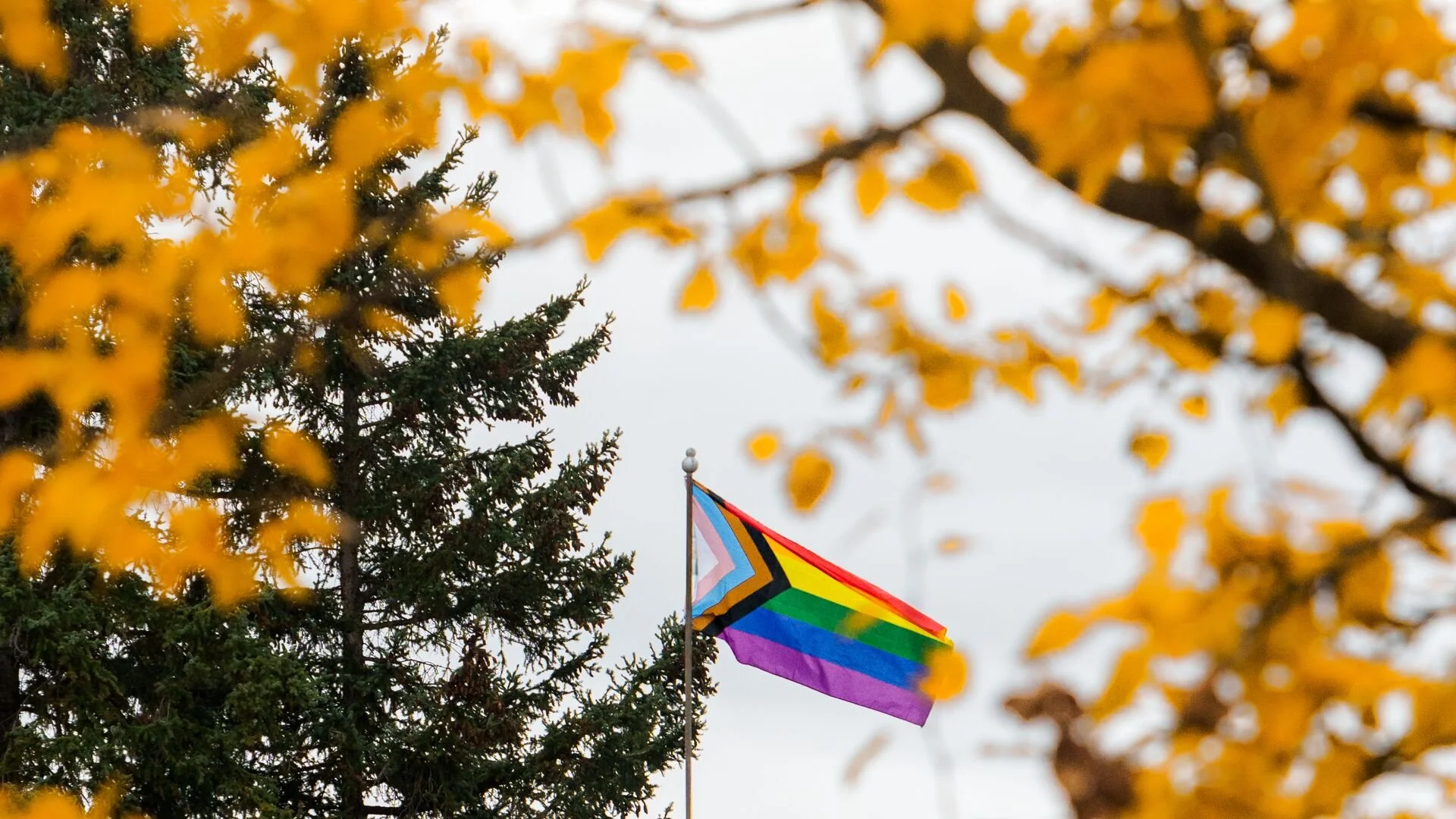
Definition: Rainbow washing is the practice of displaying 2SLGBTQIA+ symbols or language, particularly during Pride Month, without making substantive changes to policies, hiring practices, or guest experience design. It is a form of performative inclusion that prioritizes optics over action.
Examples:
Adding a rainbow flag to a logo for June without implementing inclusive staff training
Using 2SLGBTQIA+ imagery in marketing while maintaining policies that exclude or disadvantage queer employees
Promoting Pride events without any year-round commitment to community support or inclusion
Why it matters: Rainbow washing is increasingly recognized and called out by 2SLGBTQIA+ travelers and community members. Businesses in the Bow Valley that want to build genuine trust with queer guests and residents must back up visible symbols with operational commitment. The Bow Valley Pride Network's DEI workshops are designed to help businesses close the gap between intention and practice.
-
Definition: A safe space is an environment in which people can express their identities, experiences, and perspectives without fear of judgment, discrimination, harassment, or harm.
Important nuance: The term is often used aspirationally. No environment can guarantee safety for all people at all times. A more precise framing used by some practitioners is "brave space," which acknowledges that creating inclusion requires active effort from everyone in the space, not just a posted sign.
Practical note: Displaying a Safe Space sticker or flag without staff training to back it up can raise expectations that are then unmet, which can be more damaging to a guest's trust than no visible signal at all.
-
Definition: Sexual orientation refers to the pattern of emotional, romantic, and/or sexual attraction a person experiences toward others. Common orientations include heterosexual, gay, lesbian, bisexual, pansexual, and asexual, among others.
Key distinction: Sexual orientation is distinct from gender identity. They are separate aspects of a person's experience and should not be conflated.
-
Definition: Systemic discrimination refers to patterns of exclusion, disadvantage, or harm that are embedded in the policies, practices, and structures of organizations and institutions, rather than arising solely from individual prejudice. It can occur even when no individual intends to discriminate.
Examples in tourism and hospitality: A booking system that only allows binary gender options. A hiring process that screens out applicants based on name-based assumptions about gender or ethnicity. A staff handbook that uses exclusively gendered language. A spa policy that directs guests to gendered facilities without providing a neutral option.
Why it matters in the Bow Valley: Addressing systemic discrimination requires looking beyond individual attitudes and examining the systems themselves. For Banff and Canmore tourism businesses, an operational review of guest touchpoints through an inclusion lens, which is a core component of the Bow Valley Pride Network's DEI workshops, is the most direct way to identify and address systemic barriers.
-
Definition: Transgender, often shortened to trans, is an adjective describing a person whose gender identity differs from the sex they were assigned at birth. Transgender is used to describe people across a range of identities, including trans men, trans women, and nonbinary people.
Usage notes:
"Transgender" is an adjective, not a noun. Say "a transgender person," not "a transgender" or "a transgendered."
Do not use the word "transsexual" unless a specific person uses it to describe themselves.
A person's transgender identity does not depend on whether they have had any medical procedures.
Why it matters in tourism: Trans guests may face unique challenges in hospitality settings, including gendered check-in processes, room assignments, spa and change room access, and documentation requirements. Proactively reviewing these touchpoints is a key step in building a genuinely inclusive guest experience.
-
Definition: Two-Spirit is an Indigenous identity that describes a person who holds both a masculine and feminine spirit. It is a term rooted in Indigenous cultural traditions and worldviews and is specific to Indigenous peoples. Two-Spirit is not synonymous with gay, lesbian, or transgender, though there may be overlap in some individuals' identities.
Important context: Two-Spirit is a term that belongs to Indigenous communities. It is not appropriate for non-Indigenous people to adopt as a personal identity. In the Canadian 2SLGBTQIA+ acronym, Two-Spirit is placed first as an acknowledgment of Indigenous sovereignty and the fact that Two-Spirit identities existed on this land long before European contact.
Why it matters in the Bow Valley: Banff and Canmore sit on the traditional territories of the Nakoda Sioux, Blackfoot Confederacy, and other Indigenous peoples. Respectful acknowledgment of Two-Spirit identities is part of a broader commitment to Indigenous inclusion and reconciliation in the region.
-
Definition: Unconscious bias refers to attitudes, stereotypes, or assumptions that influence a person's judgments and behaviour without their awareness. These biases are shaped by social conditioning, media, and lived experience, and can affect how people interact with guests, colleagues, and job candidates in ways that produce unequal outcomes.
Examples in hospitality:
Assuming a same-sex couple sharing a room are friends rather than partners
Giving more attentive service to guests who fit a mental image of a "typical" high-spending visitor
Interpreting a gender-nonconforming guest's appearance as a reason for hesitation during check-in
Screening job applicants differently based on names that signal gender or ethnicity
Why it matters: Unconscious bias is one of the most important concepts in any DEI staff training because it shifts the conversation from blame to awareness. Most bias operates below the level of conscious intention. Recognizing it is the first step toward changing it. The Bow Valley Pride Network's workshops use scenario-based exercises specifically designed to surface and address unconscious bias in tourism and hospitality settings.
Key distinction: Acknowledging unconscious bias is not about concluding that a person is prejudiced. It is about recognizing that everyone has biases shaped by the world they grew up in, and that awareness makes it possible to act differently.
A Note on Evolving Language
Language in DEI and 2SLGBTQIA+ contexts changes regularly, as communities refine how they describe their own experiences. This glossary reflects terminology widely in use at time of publication. The most important habit a business can develop is to listen to the communities being described and follow their lead.
If your team is unsure about a term, asking respectfully and in good faith is far better than avoiding the conversation altogether.
Your Next Step
Understanding this language is the foundation. Putting it into practice with your team is where the real shift happens. The Bow Valley Pride Network offers DEI workshops designed specifically for tourism and hospitality businesses in Banff, Canmore, and the broader Bow Valley region.
Book a DEI workshop for your team and turn this glossary into a living practice across every guest interaction.